
OnlyFans gives subscribers no built-in way to compare prices before they commit, which is why external ranking data exists. Ranking sites fill that gap by collecting pricing information and publishing comparisons, but the quality of those comparisons depends entirely on the method behind them. This guide breaks down how price comparison methodology works for OnlyFans ranking data, where the numbers come from, and how to tell a well-maintained dataset from one that has gone stale. BestOnlyFans is used here as a working example of a ranking operation with defined methodological limits, not as a claim that any single directory is complete.

Why External Directories Exist for OnlyFans
It processes subscriptions, pay-per-view messages, and tips, but it does not help a subscriber find creators or compare what they charge.
A subscriber usually arrives with a creator already in mind, referred from social media or a mention somewhere else. Once inside the platform, there is no equivalent of a search box for people, no category tree, and no price column to sort.
- No search functionality for discovering creators by name or topic
- No price browsing or sorting across accounts
- No category filtering to narrow a large field of options
- No verification badges confirming that a page is run by the person it claims to represent
- No promotional transparency showing whether a displayed price is temporary
A directory that publishes a sortable price list is solving a problem the platform itself has no incentive to solve. The tradeoff is that any external list is only as good as the collection process behind it.
Tip: treat any ranking page as a starting point, not a verdict. If a listing shows a price, the only authoritative source is the creator’s own subscription page at the moment you are about to pay.
Data Collection Methods and Their Limitations
There is no partner API that hands over current subscription prices, so every directory builds its own pipeline.
- Automated price checking: high accuracy but latency issues, since pages change between scan cycles and repeated requests can be rate-limited.
- Manual verification sweeps: high accuracy but infrequent, because a human has to open each page and record what it shows.
- Creator self-reporting: medium accuracy with incentive bias, since a creator may report a promotional price or omit a recent increase.
- User-submitted corrections: variable accuracy with a verification backlog, useful for spotting changes but dependent on moderation.
- Social media monitoring: low accuracy with high noise, because announcements are scattered across platforms and often deleted or edited.
A well-run site states its update cadence openly and marks entries that have not been confirmed recently. A poorly run site presents everything with the same confident formatting, which hides the difference between a price checked this morning and one checked three months ago.

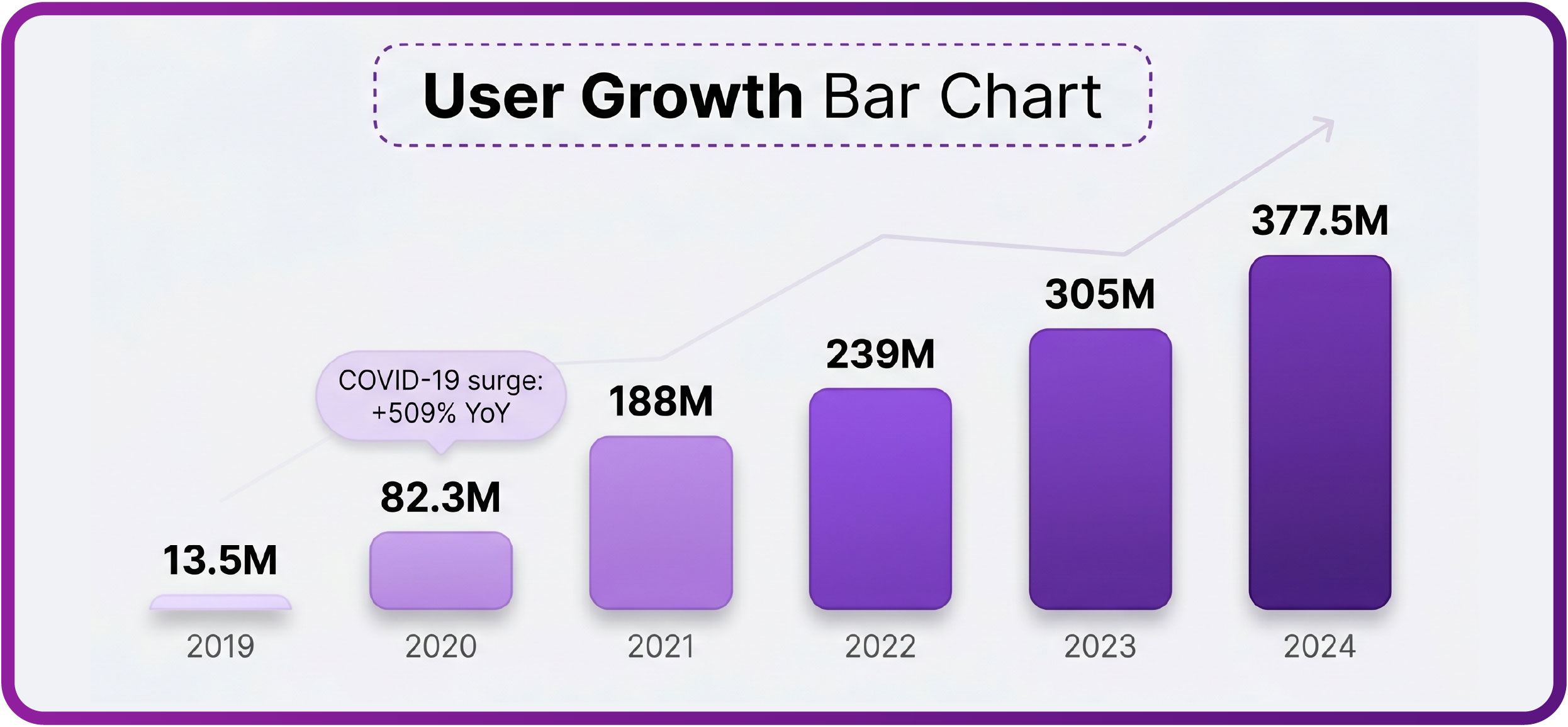
Scale makes this harder. The platform’s user base expanded sharply around 2020, and a larger creator pool means more pages to track with the same limited tooling. Growth charts that show the surge also explain why manual verification became impractical for large directories and why automation took over most of the workload.
BestOnlyFans Price History Construction
A history is only meaningful if it distinguishes a base price from a temporary promotion, and if it records when each change happened.
The methodology used here treats every price as an event with a timestamp rather than a field to overwrite. That approach preserves the trajectory of a creator’s pricing instead of flattening it into a single current value. It also makes stale entries visible, because an entry that has not logged an event in months looks different from one updated this week.
- Timestamp granularity: recording the date a price was observed, not just the date it was added
- Price change event logging: storing each shift as a separate record rather than replacing the previous value
- Promotional versus base price distinction: flagging temporary discounts separately from standing rates
- Creator page status tracking: noting when a page goes inactive, switches to free, or closes
- Data decay indicators: surfacing entries that have not been verified within a set window
Paid base subscriptions run from $4.99 at the minimum to $49.99 at the maximum, and a promotional first month can sit below that floor, for example a $3 opening month.

One more structural fact belongs in any methodology note: when a creator raises the price, auto-renew stops for existing subscribers. A price history that ignores this will make a jump look like an instant charge to everyone, which is not how the billing works.
Verifying Ranking Data Against Live Prices
The goal is not to catch a directory in an error for its own sake, but to avoid paying based on a number that no longer exists. Five steps cover most of the risk.
- Note the ranking timestamp before checking the live price, so you know how old the entry is.
- Compare across two ranking sites to see whether they agree on the same figure.
- Check the creator’s social media for announced changes, including promotions that started after the last scan.
- Examine price history volatility, since frequent jumps signal an unstable pricing pattern and weaker data reliability.
- Confirm auto-renew eligibility and the current price on the platform itself before you subscribe based on a ranking.

Because raising a price ends auto-renew rather than repricing an existing subscription, a subscriber who wants to keep access at a new rate has to resubscribe deliberately. Ranking pages rarely explain that step, and a comparison table showing only numbers will not either.
There is also a security dimension. Fake creator pages and payment-themed schemes appear wherever money moves, and imitation prompts designed to harvest card details are common. Background on how those attempts are built helps you spot the pattern before entering payment information anywhere. A card verification hold of $0.10, refunded within days, is normal; any request for more than that as a “verification” is not.

It does not verify prices, but it protects the account you use to pay them.
Comparing Methodologies Across Ranking Sites
Two sites can list the same creator at different positions and both be internally consistent, simply because one emphasizes current price while the other emphasizes stability over time.
| Ranking Variable | BestOnlyFans Weighting | Typical Alternative Weighting |
|---|---|---|
| Current subscription price | High, adjusted for base versus promotional status | High, often without promotion adjustment |
| Price stability over time | High, drawn from logged change events | Low, frequently omitted entirely |
| Content volume metrics | Moderate, used as a supporting signal | High, sometimes the primary sort key |
| Engagement rate proxies | Moderate, treated as noisy | Variable, occasionally weighted heavily |
| Promotional frequency scoring | Moderate, flags repeat discounters | Low, usually not scored |
A price-first list answers “what is cheapest right now.” A stability-first list answers “whose pricing has been predictable.” Those are different questions, and a subscriber looking for value has to decide which one matters for their own case.
Anyone collecting best only fans recommendations from several directories should read the methodology note before the list. A site that publishes its variables, update cadence, and known blind spots is more useful than one that publishes a confident ranking with no explanation of where the numbers came from.
Pricing structure also varies inside the platform in ways a single subscription figure cannot capture. Pay-per-view messages unlock at up to $50, paid chat commonly runs $3 to $5 per message, and tips can reach $100. A creator with a $5 subscription and heavy PPV use may cost more over a month than one at $15 with no upsells.
Using Ranking Data for Value Assessment
The final step is context. Price data tells you what a subscription costs; it does not tell you what you are buying.
| Data Point | What It Suggests | Required Context |
|---|---|---|
| Low current price | A promotion or a genuinely low base rate | Promotional status and expiry date |
| High price volatility | An unstable creator business pattern | Whether increases were announced in advance |
| High content count | Archive depth or a fast posting pace | Recency of the newest posts, not just total |
| Mixed review signals | Quality variance or purchased engagement | Whether reviews are verified or open submissions |
| Strong ranking longevity | Established presence or outdated data | Last verified timestamp on the entry |
Weigh those five factors alongside the raw price:
- Content type and production value expectations for the niche
- Posting frequency and how recent the latest posts are
- PPV message density and the pricing attached to unlocks
- Tip culture and rates for custom content requests
- Subscriber community size and the quality of visible engagement
A subscription at the typical $4.99 to $15 range, with averages clustering around $5 to $10, is a modest monthly commitment. The larger cost often sits in PPV and messaging, which is why a ranking that only compares base prices can understate the real difference between two creators.
Decide what a creator is worth per month to you, then check whether the base price plus expected PPV spending fits inside that number.

When a charge looks wrong, the help centre and the platform’s own support flow are the correct escalation path, not a ranking site.
FAQ
How often do the ranking site price listings update?
Automated checks run on a repeating cycle, while entries confirmed manually carry the date of the last sweep. Each listing should show its verification timestamp so you can judge how current the number is before relying on it.
Why might a ranking site show a different price than I see on OnlyFans?
The most common reasons are a promotional period that started or ended after the last scan, a base price change that has not been logged yet, or a free page earning through PPV rather than a subscription. A verification hold of $0.10 can also appear during checkout and is not a price difference.
Can ranking sites detect when creators run private promotions?
Usually not reliably. Discounts announced only to existing subscribers, sent through direct messages, or limited to a short window are invisible to external collection methods. Social media monitoring catches some of them, but coverage is inconsistent and the resulting data should be treated as incomplete.
How should I weigh price history versus current price in my decision?
Use current price for what you will pay today and price history for what you are likely to pay later. A stable history at a slightly higher rate is often more predictable than a low current price attached to frequent increases, especially given that a price rise ends auto-renew rather than repricing you automatically.